
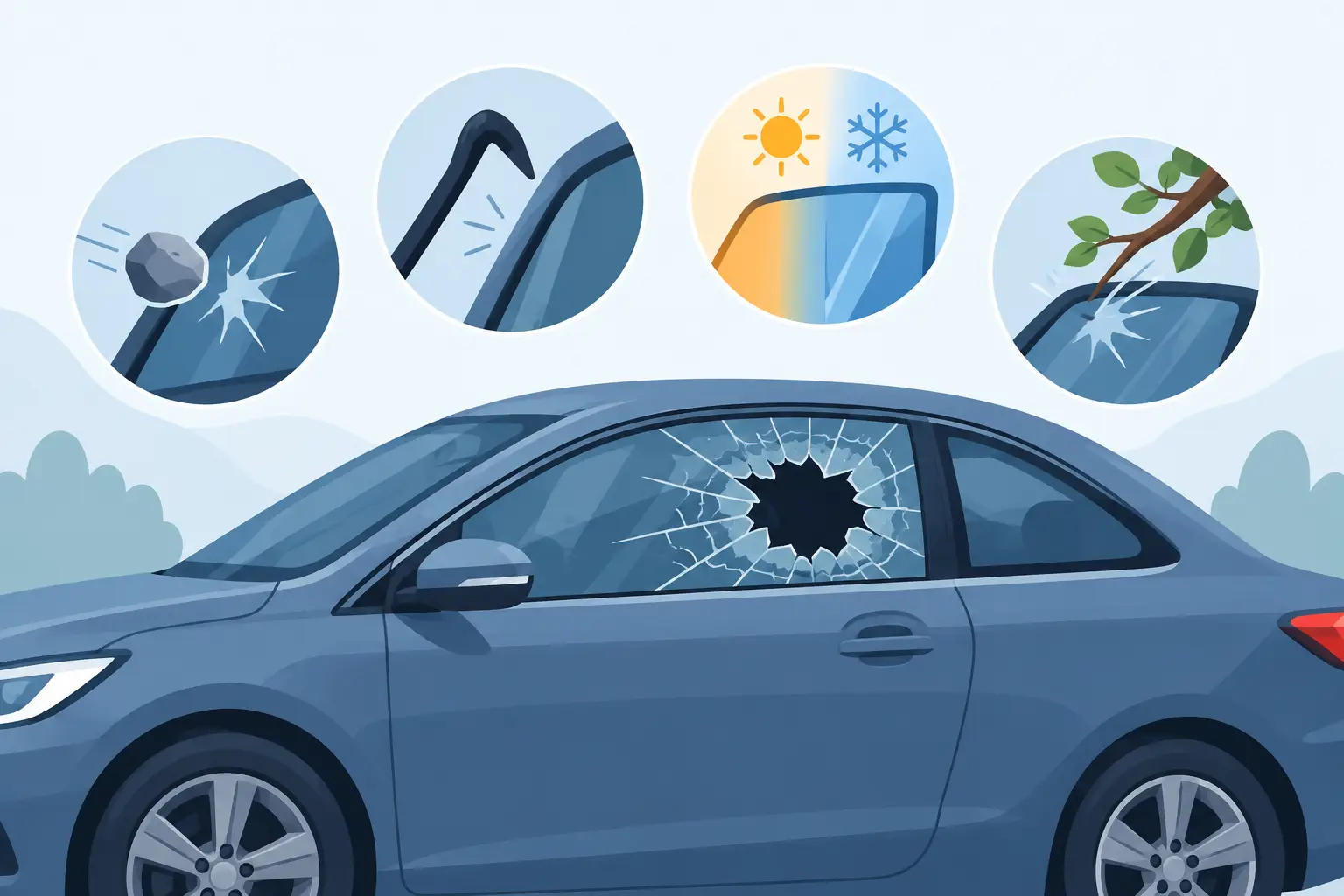
A loud pop in the driveway, glass scattered across the seat, or a windshield crack that seems to grow overnight can stop your day quickly. Knowing the common window breakage causes in your car helps you protect your passengers, avoid a larger repair, and decide when to call for mobile auto glass service.
In Phoenix and the East Valley, heat, freeway debris, break-ins, and everyday wear all take a toll on vehicle glass. Some damage is sudden. Other problems start as a small chip, a slow-moving crack, or a power window that begins sticking before the glass breaks completely. The right response depends on which glass is damaged, how severe the damage is, and whether the vehicle can still be driven safely.
The Most Common Window Breakage Causes
Road debris and rock chips
Loose gravel, construction debris, and small rocks kicked up by trucks are among the most frequent causes of windshield damage. A rock does not need to be large to create a chip. At freeway speed, even a small piece of debris can hit with enough force to leave a bull’s-eye, star break, or small crack.
A chip may be repairable when it is small, recent, and outside the driver’s direct view. Waiting can change that. Vibration from normal driving, a pothole, or a sharp temperature change can turn a repairable chip into a long crack that requires full windshield replacement.
Keep clear tape over a fresh chip if you can do so without pressing on the glass. It can help keep dirt and moisture out until a technician inspects it. Do not use glue, nail polish, or a household glass repair product on a windshield. Those products can make a professional repair harder or less effective.
Extreme Arizona heat and temperature changes
Desert heat does not usually make an undamaged windshield suddenly shatter by itself. It can, however, put added stress on glass that already has a chip, crack, edge damage, or a weak point from a previous impact.
The glass heats unevenly when a vehicle sits in direct sun. Turning the air conditioning on full blast against a very hot windshield can create a rapid temperature difference. Parking in shade, using a windshield sunshade, and allowing the cabin to cool gradually can reduce stress. These steps will not fix existing damage, but they may help prevent a small crack from spreading before service.
Heat also affects window mechanisms. Aging regulator cables, plastic guides, and weatherstripping can become brittle over time. If a side window is moving slowly or binding, do not force the switch repeatedly. The regulator may be failing, and forcing the glass can cause it to tilt, scratch, or break.
Break-ins and attempted theft
Side windows and rear windows are most often damaged during a break-in. Thieves commonly target door glass because tempered side glass is designed to break into many small pieces rather than sharp, dangerous shards. Unfortunately, that also means a side window can be broken quickly.
If your vehicle has been broken into, avoid reaching through the opening or sitting in the vehicle until loose glass is removed. Take photos for your insurance claim if needed, secure valuables, and arrange replacement as soon as possible. A missing door window leaves the interior exposed to heat, dust, weather, and another theft attempt.
Rear-window replacement can be especially urgent because many back windows contain defroster lines, antennas, cameras, or other components. A qualified technician should verify that those features work properly after replacement.
Accidents, door impacts, and body damage
A collision does not have to hit the windshield directly to damage auto glass. A hard impact to the door, roof, quarter panel, or trunk area can flex the vehicle body and crack glass. Slamming a damaged door can also cause a weakened side window to fail.
After an accident, check more than the obvious broken area. Look for new windshield cracks near the edges, water leaks, wind noise, a window that no longer moves smoothly, or damaged molding around the glass. These signs can point to alignment or mounting issues that should be addressed before they become a larger problem.
Failing power window regulators and motors
Not every broken car window starts with an impact. A failing power window regulator can let the glass drop into the door, move crookedly, stop halfway, or make grinding and clicking sounds. If the glass is unsupported inside the door, it can rattle against metal parts and eventually crack.
The motor may be the issue if you hear no movement when using the switch. If you hear the motor but the glass does not move properly, the regulator, cable, clips, or track may be damaged. The problem needs diagnosis because replacing only the glass will not solve a faulty mechanism.
Power window regulator repair is often the better solution when the glass is intact but stuck or off track. If the glass is cracked, shattered, or heavily scratched, both the door glass and the damaged mechanism may need service.
Improper installation or old glass damage
Poor installation can create stress around a windshield or back window. Missing clips, incorrect adhesive, damaged molding, or a windshield that is not seated correctly may lead to wind noise, water leaks, or cracking near the edges. That is one reason trained installation matters, especially on newer vehicles with cameras and safety sensors.
Older vehicles may also have glass weakened by years of small chips, sand abrasion, and repeated temperature exposure. A windshield can remain in place for years with minor damage, but visibility and structural integrity should guide the decision. Deep pits in the driver’s view, edge cracks, and cracks that keep growing are signs that replacement is usually the safer choice.
When Can Auto Glass Be Repaired?
Windshield repair is a practical option when damage is limited and the surrounding glass is stable. A certified technician can inspect the chip’s size, depth, location, and contamination level. Repairs are designed to stabilize the damage and improve appearance, but they do not make every chip disappear completely.
Repair is less likely to be appropriate when a crack reaches the windshield edge, sits directly in the driver’s line of sight, has spread extensively, or penetrates both layers of laminated glass. Side and rear windows are generally made from tempered glass. Once they break, replacement is required rather than repair.
Timing matters. The sooner a chip is inspected, the better the chance that a repair can save the original windshield and cost less than replacement.
Why a Cracked Windshield Is More Than a Visibility Problem
Your windshield supports more than a clear view of the road. It contributes to the vehicle’s roof strength and helps support airbag performance in many vehicles. A cracked windshield may not seem urgent when the crack is small, but damage can spread quickly in Phoenix heat and road vibration.
Newer vehicles may also have forward-facing cameras or driver-assistance systems mounted near the windshield. When that windshield is replaced, sensor calibration may be needed so safety features can operate as intended. Skipping calibration when it is required is not a shortcut worth taking.
What to Do Right After a Window Breaks
First, protect yourself and your passengers. Pull over safely if the break occurs while driving. Avoid touching sharp or loose glass, and keep children and pets away from the affected area. If the windshield is badly cracked across your view, or if a side window has shattered into the cabin, it is better not to keep driving unless necessary for immediate safety.
For a broken side or rear window, cover the opening temporarily if possible, but do not tape directly onto painted surfaces for long periods. Remove larger loose pieces only if you can do so safely. A professional auto glass technician can clear remaining glass from the door or cargo area and confirm the window operates correctly after repair.
Document the damage with photos if you plan to file an insurance claim. Many comprehensive policies cover windshield and auto glass damage, although coverage and deductibles vary. Pacific Auto Glass accepts all insurance glass claims and can also provide straightforward pricing for customers paying out of pocket.
Preventing Avoidable Auto Glass Damage
You cannot prevent every rock strike or break-in, but a few habits can lower the risk. Leave extra space behind gravel trucks and construction vehicles. Repair chips early instead of waiting for them to spread. Use a sunshade during long outdoor parking, and avoid blasting cold air onto a scorching windshield.
Pay attention to a slow, noisy, or crooked power window. That small warning can be less expensive to address before the regulator fails and the glass drops into the door. Also avoid slamming doors when a window is partially down, especially if the glass already appears loose.
For drivers in Mesa, Tempe, Chandler, Gilbert, Queen Creek, San Tan Valley, Maricopa, Scottsdale, and Phoenix, mobile service can keep a broken window from taking over the entire day. Whether the issue is a fresh rock chip, shattered door glass, a damaged rear window, or a stuck power window, getting it inspected promptly is the simplest way to protect your vehicle, your visibility, and the people riding with you.
