
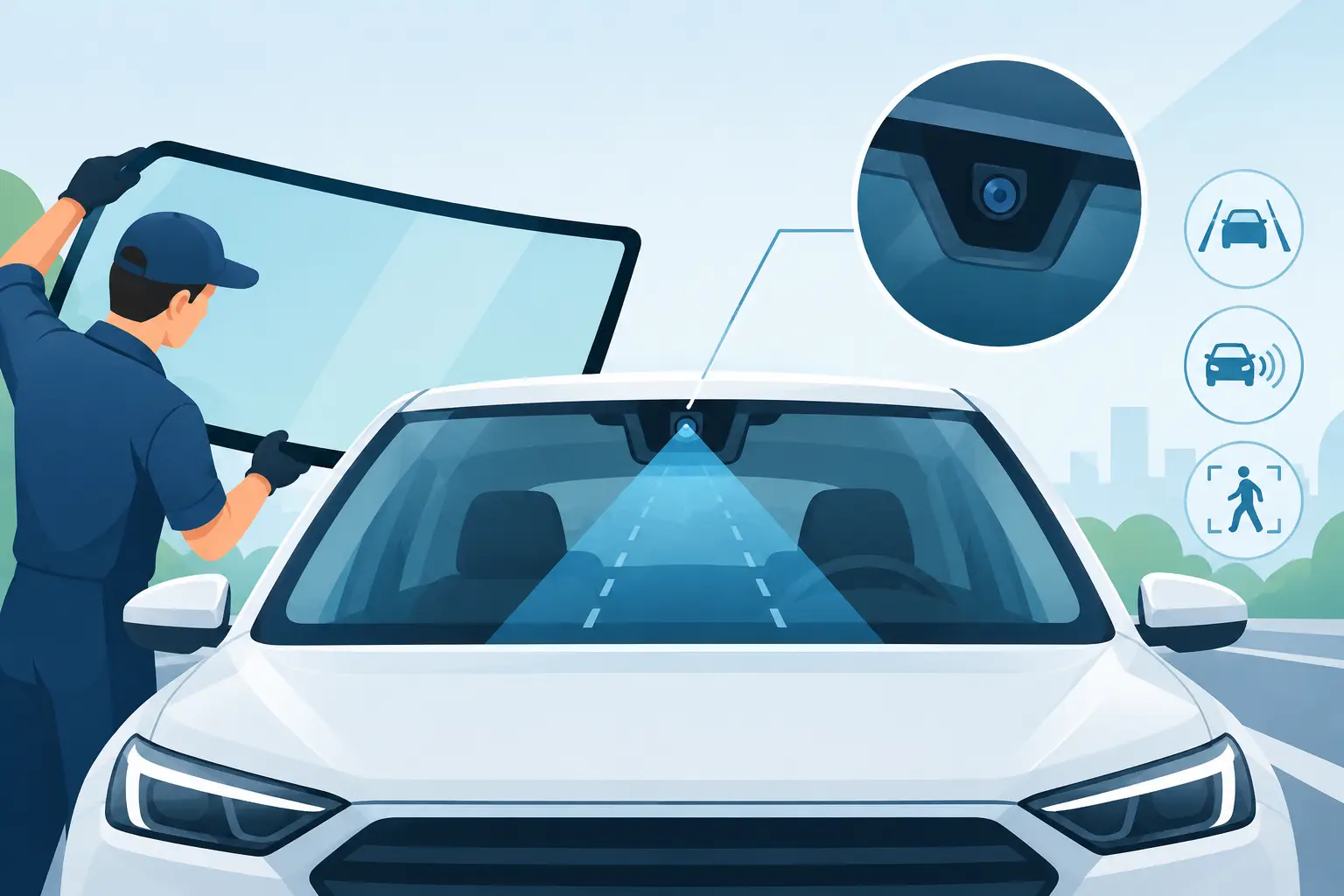
A windshield is no longer just a piece of safety glass. On many newer vehicles, it supports a forward-facing camera that helps power lane departure warnings, automatic emergency braking, adaptive cruise control, and other driver-assistance features. This ADAS replacement guide explains what needs to happen when that windshield is replaced, why calibration matters, and what Phoenix-area drivers should expect from the job.
What ADAS Has to Do With Your Windshield
ADAS stands for Advanced Driver Assistance Systems. These systems use cameras, sensors, radar, and software to monitor the road around your vehicle. The camera mounted near the rearview mirror is often looking through the windshield, which means the glass and camera position work together.
A rock chip, spreading crack, or broken windshield may make replacement necessary. Once the original windshield comes out, the camera’s viewing angle can change by a small amount. Even a slight difference in camera position, glass thickness, or mounting can affect how the vehicle reads lane lines, nearby vehicles, pedestrians, and road conditions.
That is why a windshield replacement on an ADAS-equipped vehicle is not complete just because the new glass looks clear. The vehicle may also require ADAS calibration so its safety features can recognize the road accurately.
Not every vehicle has ADAS, and not every ADAS vehicle uses the same calibration procedure. The correct service depends on the year, make, model, windshield options, and the features installed on your specific vehicle.
When ADAS Calibration Is Needed After Replacement
In many cases, calibration is required after windshield replacement when the forward-facing camera is attached to or views through the windshield. Your vehicle manufacturer may require it, and some vehicles will display a warning message when the system needs attention.
Calibration may also be needed after a collision, suspension work, wheel alignment, camera replacement, or damage around the mirror mount. A windshield that was installed with the wrong camera bracket or glass option can create problems as well.
Watch for dashboard messages such as “Front Camera Unavailable,” “Lane Assist Unavailable,” or “Collision Warning System Needs Service.” You may also notice that lane-keeping assistance turns off, adaptive cruise control will not activate, or warning features behave inconsistently.
Do not assume these alerts will clear on their own after a few drives. A camera can appear normal while still being slightly out of position. That can cause a safety feature to react too late, react when it should not, or fail to recognize what is ahead.
A Clear Windshield Does Not Confirm a Correct Calibration
It is easy to judge a glass job by appearance. The windshield should be clean, sealed, and free of wind noise or water leaks, but visual results are only part of the work on a vehicle with ADAS.
A proper replacement also includes confirming the correct windshield part is used. Some windshields have special brackets, acoustic layers, heating elements, humidity sensors, heads-up display areas, or camera-specific features. OEM-quality glass that matches your vehicle’s required options helps support proper fit and camera performance.
Static vs. Dynamic ADAS Calibration
There are two common types of camera calibration. Some vehicles need one method, while others require both.
Static calibration
Static calibration is performed with the vehicle parked. A technician uses scan tools and manufacturer-specified targets placed at exact distances and heights in a controlled setup. The process allows the camera to measure its position and reset its reference point.
This method requires level space, accurate target placement, proper lighting, and the right equipment. It should not be rushed or performed by guessing at measurements.
Dynamic calibration
Dynamic calibration is completed while the vehicle is driven under specific conditions. Depending on the manufacturer, the vehicle may need to travel at a certain speed on roads with visible lane markings while the system relearns its view.
Arizona roads can make dynamic calibration practical, but traffic, faded lane paint, construction zones, harsh glare, and weather can affect whether the procedure completes. If conditions are not right, a technician may need to try again or use a different manufacturer-approved process.
The key point is simple: calibration is a vehicle-specific procedure, not an optional add-on that is handled the same way on every car, truck, or SUV.
What a Proper ADAS Windshield Replacement Looks Like
A reliable job starts before the old windshield is removed. The technician should identify the vehicle correctly, verify its safety features, and select glass with the proper options. This prevents a common problem: installing a windshield that fits physically but does not properly support the camera or sensors.
During replacement, the technician removes the damaged glass carefully, prepares the frame, and installs the new windshield with quality materials. The camera, mirror assembly, trim, and any connected components should be reinstalled correctly. A windshield is a structural safety component, so proper bonding and safe drive-away time matter just as much as the glass itself.
After installation, the vehicle should be scanned and calibrated as required. The technician then verifies that the calibration process completed successfully and checks for fault codes or warning lights. If a system cannot be calibrated due to an existing vehicle issue, poor road conditions, or a separate sensor problem, the customer should be told clearly what happened and what service may be needed next.
At Pacific Auto Glass, certified technicians can help identify whether your windshield replacement includes calibration needs, so you are not left guessing after the new glass is installed.
Can You Drive Before Calibration Is Complete?
It depends on the vehicle and the condition of the windshield installation. Once the windshield adhesive has cured for the required safe drive-away time, the vehicle may be physically safe to drive. However, ADAS features may be unavailable or may not operate as intended until calibration is completed.
Treat this as a safety issue, not just an inconvenience. You remain responsible for steering, braking, and watching the road regardless of driver-assistance features. Until the system is confirmed and working correctly, do not rely on lane-centering, forward collision alerts, automatic braking, or adaptive cruise control.
If you must drive, use normal defensive-driving habits and schedule calibration as soon as possible. A qualified technician can tell you whether your vehicle requires static calibration, dynamic calibration, or both.
Does Insurance Cover ADAS Calibration?
Many comprehensive auto insurance policies cover windshield replacement, and calibration may be included when it is necessary to restore the vehicle to proper operating condition. Coverage, deductibles, and claim requirements vary by policy and carrier.
When you request a quote, provide your vehicle year, make, model, VIN if available, and details about camera-based safety features. Mention any dashboard warnings you see. This helps the glass company order the right windshield and explain what the insurance claim may include.
For cash-paying customers, asking about calibration before work begins helps avoid surprises. The lowest windshield price is not always the lowest total cost if it does not include the correct glass, proper installation, or required system calibration.
Questions to Ask Before Scheduling Service
Before approving a windshield replacement, ask whether your vehicle has a forward-facing camera and whether calibration is required. Confirm that the replacement glass matches features such as rain sensors, acoustic glass, heads-up display compatibility, heating, and camera brackets.
It is also reasonable to ask how calibration will be handled, whether it is performed after installation, and what happens if the vehicle has existing warning lights or fault codes. A straightforward answer is a good sign. ADAS work involves technology, but the process should still be explained in plain language.
Mobile windshield replacement can be a convenient option for commuters, families, rideshare drivers, and work vehicles across Mesa, Tempe, Chandler, Gilbert, Queen Creek, San Tan Valley, Maricopa, Scottsdale, and Phoenix. Still, calibration requirements may affect where and how the service is completed. A mobile replacement may be possible at your home or workplace, while certain calibrations need controlled conditions or a follow-up location. The right choice depends on your vehicle, not on a one-size-fits-all promise.
Do Not Put Off a Damaged Windshield
Phoenix heat can turn a small chip into a long crack quickly. Heat changes, road vibration, and pressure from normal driving can make damage spread across the driver’s line of sight. If your vehicle has camera-based safety features, waiting can create two problems: a worsening visibility issue and a more involved replacement process later.
A small rock chip may be repairable when it is addressed early, especially if it is outside the driver’s direct view and has not spread. Once the damage is too large, too deep, or positioned where safe repair is not possible, windshield replacement is usually the better answer.
If you have a cracked windshield or an ADAS warning after glass work, get a clear quote, confirm the calibration plan, and choose service that restores both your visibility and the safety systems designed to help protect you on the road.
