
A wet headliner after a monsoon storm, damp carpet near the dash, or a musty smell inside the cabin can point to one frustrating problem: a leaking windshield. If you need to fix windshield leak trouble, act sooner rather than later. Water can travel behind trim and under carpeting, so the spot where you see moisture is not always where the leak began.
For Phoenix-area drivers, heat, sudden rain, and years of sun exposure can turn a small seal problem into interior damage. The right repair depends on whether water is entering around the windshield, through another body opening, or from a damaged part of the vehicle. A little diagnosis can prevent spending money on the wrong fix.
First, Make Sure the Windshield Is the Source
A windshield leak does not always mean the glass itself is cracked. Water may enter through a worn windshield seal, a failed adhesive bond from an earlier replacement, damaged molding, clogged cowl drains, a sunroof drain, or a door weatherstrip. Because water follows gravity and vehicle panels, it can show up at the floorboard even when the actual entry point is near the roofline.
Start by drying the interior as thoroughly as possible. Remove loose floor mats, blot the carpet, and leave the doors open in a safe, dry place. Do not ignore soaked carpet. Moisture trapped underneath can lead to mold, corrosion, damaged wiring, and a lingering odor that is much harder to remove later.
Next, look for clues. Staining on the headliner near a windshield corner, drips around the A-pillars, loose exterior molding, or water at the top of the dashboard all make the windshield area more likely. If the carpet is wet but the headliner and pillars are dry, inspect door seals, firewall drains, and the cowl area too.
A careful water test can help
Have one person sit inside the vehicle with a flashlight while another slowly runs a gentle stream of water over one section at a time. Begin low on the windshield and work upward. Avoid a high-pressure hose nozzle, which can force water through places that would not normally leak in rain.
Pause between sections and watch for moisture inside. Test the windshield corners, roofline, cowl, side glass, and doors separately. If water appears, mark the area with painter’s tape. This gives an auto glass technician a useful starting point, but it does not replace a professional inspection of the glass bond and surrounding panels.
What Causes a Windshield Leak?
The most common cause is a failed urethane adhesive seal. Modern windshields are bonded to the vehicle frame with automotive-grade urethane, not simply held in place by a rubber gasket. When that adhesive was applied incorrectly, did not cure properly, or separated over time, water can find a path behind the glass.
Previous windshield work deserves close attention. An old replacement may leak if rust was not properly treated before installation, if the pinch weld was damaged, or if the wrong materials were used. A windshield can look normal from outside while the bond underneath has gaps.
Arizona weather also matters. Prolonged sun and intense temperature changes can dry out exterior moldings and stress aging materials. A rock chip or crack near the edge of the windshield can sometimes allow moisture to reach areas it should not, although a chip alone is not usually the main cause of a cabin leak.
Vehicle body damage is another possibility. A collision, even a minor one, can slightly alter the windshield opening or create a gap around trim. If the leak started after body work, glass replacement, or an accident, tell the technician. That history helps determine whether the issue is a glass installation problem or a broader body repair concern.
Can You Fix a Windshield Leak Yourself?
A temporary fix may be reasonable when you need to keep water out until a professional can inspect the vehicle. Covering the vehicle during rain, parking under shelter, and drying the interior promptly can limit further damage. If a loose exterior molding is visibly lifting, avoid pulling it off or forcing it back into place. The molding may not be the actual seal, and rough handling can create more problems.
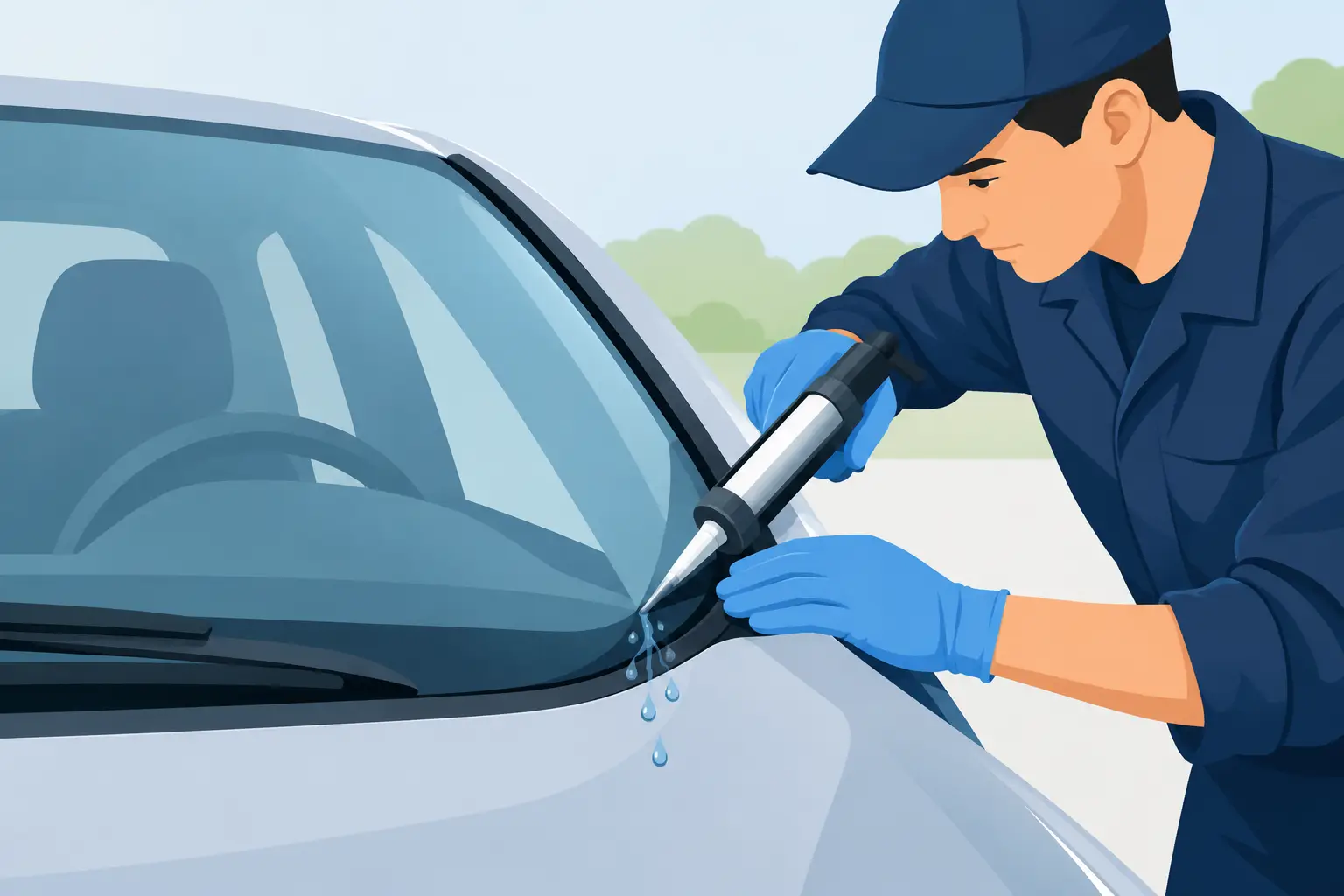
Applying household caulk, silicone, glue, or spray sealant around the windshield is usually a bad bet. These products can trap water, hide the true leak path, damage paint or trim, and make a proper windshield replacement more difficult. They also may not hold up to Arizona heat. A quick bead of silicone can turn a straightforward diagnosis into extra cleanup and labor.
Some vehicles with older gasket-style windshields may have a repairable rubber seal. Most newer vehicles, however, need the glass removed and reinstalled or replaced with the correct adhesive system if the urethane bond has failed. That job requires preparation, proper materials, and safe curing time.
When a Windshield Leak Needs Professional Repair
Schedule an inspection promptly if water enters during normal rain or a car wash, the windshield has loose edges, the leak began after a replacement, or moisture is reaching the dash, wiring, or carpet. You should also avoid driving a vehicle with a windshield that is visibly separating from the frame. The windshield supports the roof structure and helps the passenger-side airbag deploy correctly on many vehicles.
A qualified technician will inspect the glass, molding, bonding area, and nearby drains. Sometimes the repair is limited to correcting a small installation issue. Other times, the windshield must be removed so the opening can be cleaned, corrosion addressed, and the glass installed with fresh automotive urethane. If the windshield is cracked, chipped near the edge, or otherwise damaged, replacement may be the better value than trying to reseal compromised glass.
There is a trade-off between a quick patch and a proper repair. A small, confirmed issue around trim may have a simpler solution. But if the adhesive bond is compromised, resealing the outside edge does not restore the windshield’s intended structural attachment. A professional should determine which situation you have.
Do not overlook camera calibration
Many late-model vehicles have a forward-facing camera mounted near the rearview mirror. It may support safety features such as lane departure alerts, lane keeping assistance, automatic emergency braking, or adaptive cruise control. When the windshield is replaced, the camera may need calibration so those systems work as designed.
Ask whether calibration is required for your vehicle before scheduling replacement. Choosing OEM-quality glass and having certified technicians handle the installation and calibration helps protect both visibility and vehicle safety features.
How to Protect Your Vehicle While You Wait
Keep the interior dry. Use towels to absorb standing water, lift removable mats, and run the vehicle’s fan or a household fan nearby when practical. If carpet padding is soaked, it may need more than surface drying. The padding can hold a surprising amount of water beneath carpet that feels only slightly damp.
Avoid pressure washing the windshield area and do not send the vehicle through a car wash until the leak is diagnosed. If rain is expected, use covered parking when available. A temporary exterior cover can help, but do not tape materials directly to painted surfaces for long periods in high heat.
Take photos of water staining, wet areas, loose trim, and any visible windshield damage. If you recently had glass work completed, documentation can make the inspection conversation clearer. If you plan to use insurance, ask about your glass coverage and deductible before authorizing replacement. Coverage varies by policy, but many drivers are surprised to learn how their auto glass claim works.
Get Local Help to Fix a Windshield Leak
A windshield leak is more than an inconvenience when it threatens your interior, electronics, and visibility. Pacific Auto Glass provides mobile windshield replacement and auto glass service across Mesa, Tempe, Chandler, Gilbert, Queen Creek, San Tan Valley, Maricopa, Scottsdale, and Phoenix. Certified technicians can inspect the problem, explain the practical repair options, and help with insurance claims or affordable cash pricing.
If water is getting inside your vehicle, do not wait for the next storm to find out how far it can spread. Get the leak checked, dry the interior, and give your vehicle the proper repair it needs to stay safe and comfortable on the road.
