
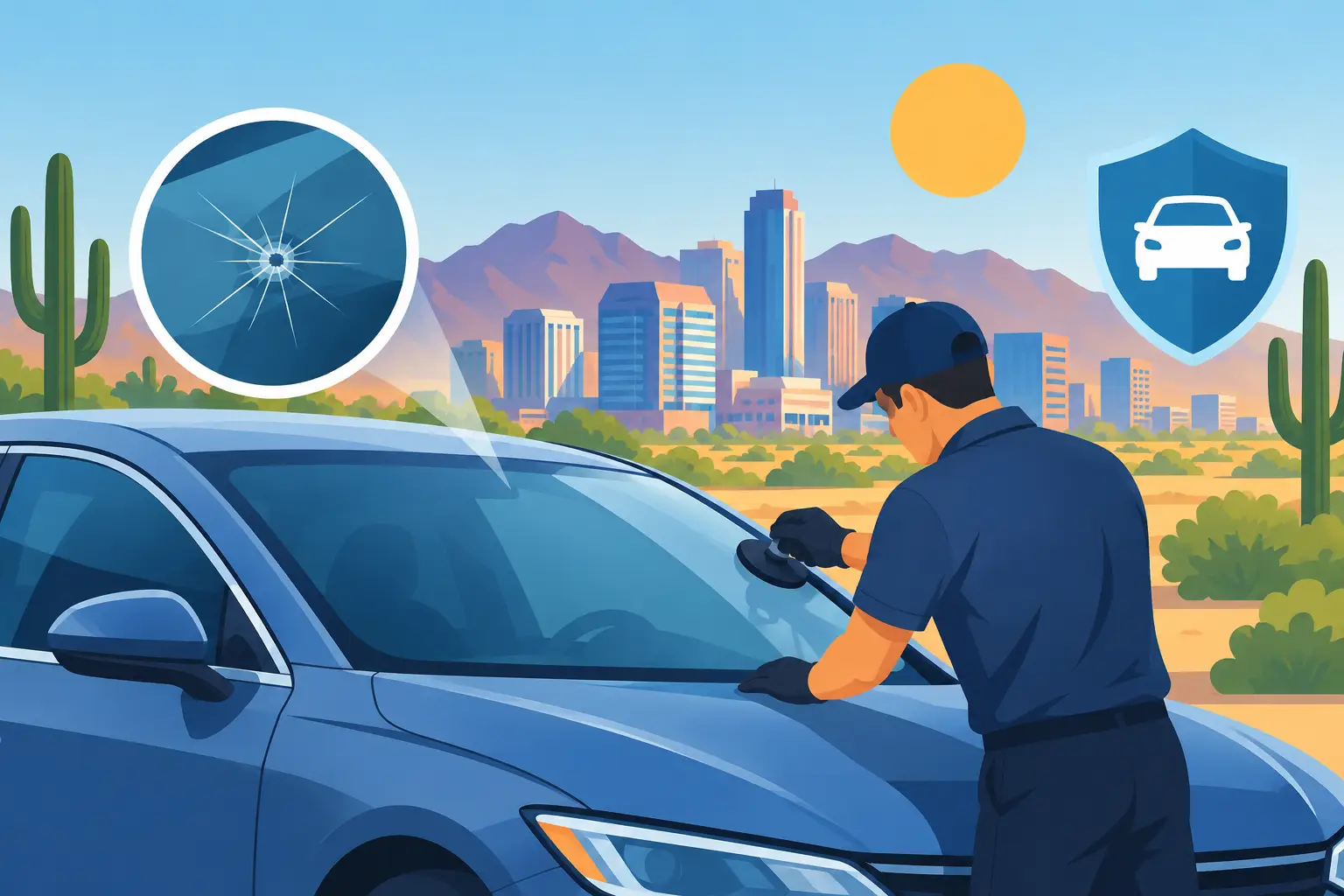
A small rock chip can turn into a long windshield crack by the end of a Phoenix commute. Heat, road vibration, and sudden temperature changes put extra stress on damaged glass. This auto glass claim guide explains what to do next, what your insurance company may ask for, and how to get your vehicle safely repaired without putting your whole day on hold.
Start by Checking Whether the Damage Is Safe to Drive With
Not every piece of damaged auto glass requires the same response. A small chip outside the driver’s main viewing area may be repairable if it is handled quickly. A crack that spreads across the windshield, damage near the edge of the glass, or a chip that reaches more than one layer of glass often calls for windshield replacement instead.
Broken door glass, rear-window glass, and side windows usually need replacement. Unlike a windshield, these pieces are typically tempered glass. They break into small pieces and cannot be repaired once shattered. If your window will not close because of a damaged regulator or motor, that is a separate mechanical repair, but it can still leave your vehicle exposed to weather and theft.
If the damage blocks your view, the windshield is badly cracked, or loose glass is falling into the vehicle, do not wait. Move the vehicle only as needed and arrange service as soon as possible. A clear windshield is a safety item, not just a cosmetic part of the car.
Check Your Auto Glass Coverage Before Filing
Auto glass damage is commonly handled under comprehensive coverage, not collision coverage. Comprehensive coverage may help with damage caused by road debris, vandalism, weather, falling objects, or a break-in. Your policy details decide what is covered, how much you pay, and whether a deductible applies.
Arizona drivers may have glass coverage options that work differently from a standard comprehensive deductible. Some policies include full glass coverage, while others require the policyholder to pay a deductible before insurance contributes. There is no single answer for every driver, so the best first step is to review your insurance card, policy app, or insurer’s customer service line.
Before you file, confirm three practical details: whether you have comprehensive or glass coverage, the amount of your deductible, and whether repair is treated differently than replacement. In some cases, a low-cost chip repair may make more financial sense as a cash service than opening a claim. In other cases, a windshield replacement is clearly worth submitting to insurance.
The Auto Glass Claim Process, Step by Step
A glass claim does not need to be complicated. Having the right information ready can make the process move faster.
Document the Damage
Take clear photos before the repair begins. Photograph the chip, crack, broken window, or shattered rear glass from both inside and outside the vehicle when possible. If the damage followed a break-in, take photos of the vehicle interior and any related damage as well.
Write down the date, location, and likely cause if you know it. For example, you may have seen a truck throw gravel onto the freeway, or you may have returned to find a broken side window in a parking lot. Your insurer may ask for a basic description, even if the exact cause is not known.
Contact Your Insurer or a Glass Shop
You can begin with your insurance company, or you can contact an auto glass provider that accepts insurance claims and can help verify coverage. Have your policy number, vehicle year, make, model, VIN if available, and the type of glass damage ready.
Your insurer may issue a claim number or connect you with a claims administrator. Keep that claim number handy. It allows the repair shop to confirm the approved work and coordinate billing when applicable.
An insurer may recommend a particular provider, but you can ask questions about your repair options and choose a qualified shop that works with your coverage. Focus on the quality of the glass, technician experience, warranty terms, calibration capability, and whether mobile service is available where you need it.
Approve the Repair or Replacement
Once coverage and pricing are confirmed, the shop can schedule the work. If your deductible applies, you generally pay that amount directly to the shop. If your policy covers the work in full, the shop may bill the insurer for the approved amount.
Ask for a clear explanation before work starts. You should understand whether the job is a repair or replacement, what type of glass will be used, whether moldings or clips are included, and whether your vehicle needs camera or sensor calibration after a windshield replacement.
Why Windshield Calibration Matters
Many newer vehicles have safety systems that look through or around the windshield. These can include forward collision warning, lane departure alerts, automatic emergency braking, rain sensors, and adaptive cruise features. The camera or sensor position may need to be recalibrated after windshield replacement.
Skipping calibration when it is required can affect how those systems perform. It is not an optional add-on for a vehicle that needs it. A qualified glass technician should identify whether your vehicle requires static calibration, dynamic calibration, or both, and make sure the work is completed according to the vehicle’s requirements.
This is one reason the lowest quote is not always the lowest total cost. A price may look attractive until necessary glass, installation materials, mobile service, or calibration are added later. Ask what is included so you can compare estimates fairly.
Choose Glass That Fits Your Vehicle and Budget
OEM-quality glass is designed to meet the fit, clarity, and safety expectations of your vehicle. Depending on the vehicle and your insurance approval, you may also have aftermarket glass options. A quality aftermarket windshield can be appropriate for many vehicles, but the right choice depends on fit, features, availability, and policy coverage.
For vehicles with heads-up displays, acoustic glass, heating elements, antennas, rain sensors, or advanced driver-assistance cameras, the glass must match the correct specifications. A windshield is not one-size-fits-all. The wrong part can create issues with visibility, noise, sensor operation, or installation.
For older vehicles, cash-paying customers, and drivers with high deductibles, a dependable aftermarket option may be the practical choice. The key is working with a shop that explains the options honestly rather than treating every vehicle the same.
Mobile Service Makes Claims Easier
A broken windshield or side window should not force you to spend half a day in a waiting room. Mobile auto glass service can bring certified technicians to your home, office, or another safe location in Mesa, Tempe, Chandler, Gilbert, Queen Creek, San Tan Valley, Maricopa, Scottsdale, or Phoenix.
Mobile service is especially helpful when a vehicle has a broken door window, shattered back glass, or a crack that makes driving uncomfortable. The technician can inspect the vehicle, remove broken glass, install the correct replacement, and help restore your vehicle’s security and usability.
There are limits. Calibration may require specific equipment and conditions, and unsafe weather or an unsuitable parking area can affect scheduling. A professional shop will explain what can be completed mobile and whether any portion of the job needs a controlled setting.
Avoid Delays That Can Cost More Later
A chip repair is usually faster and less expensive than replacing a full windshield, but only while the damage is still small and clean. Dirt, moisture, heat, and continued driving can make a repair less successful. Cover the damaged area with clear tape if needed, avoid washing the vehicle, and schedule an inspection promptly.
Do not use a DIY repair kit on damage that is large, deep, in the driver’s direct line of sight, or close to the windshield edge. Those kits have limited uses, and a failed attempt can make a professional repair more difficult. It is better to get a clear recommendation before trying to fix the glass yourself.
Pacific Auto Glass works with all insurance plans and provides free mobile service for qualifying repairs and replacements across the Phoenix metro area. Customers with eligible insurance windshield replacements may also qualify for up to $400 cash back, while cash customers can request an affordable quote before scheduling.
When glass damage happens, start with safety, check your coverage, and get the facts before the crack spreads. A quick call and a clear quote can get you back on the road with less disruption and more confidence.
