
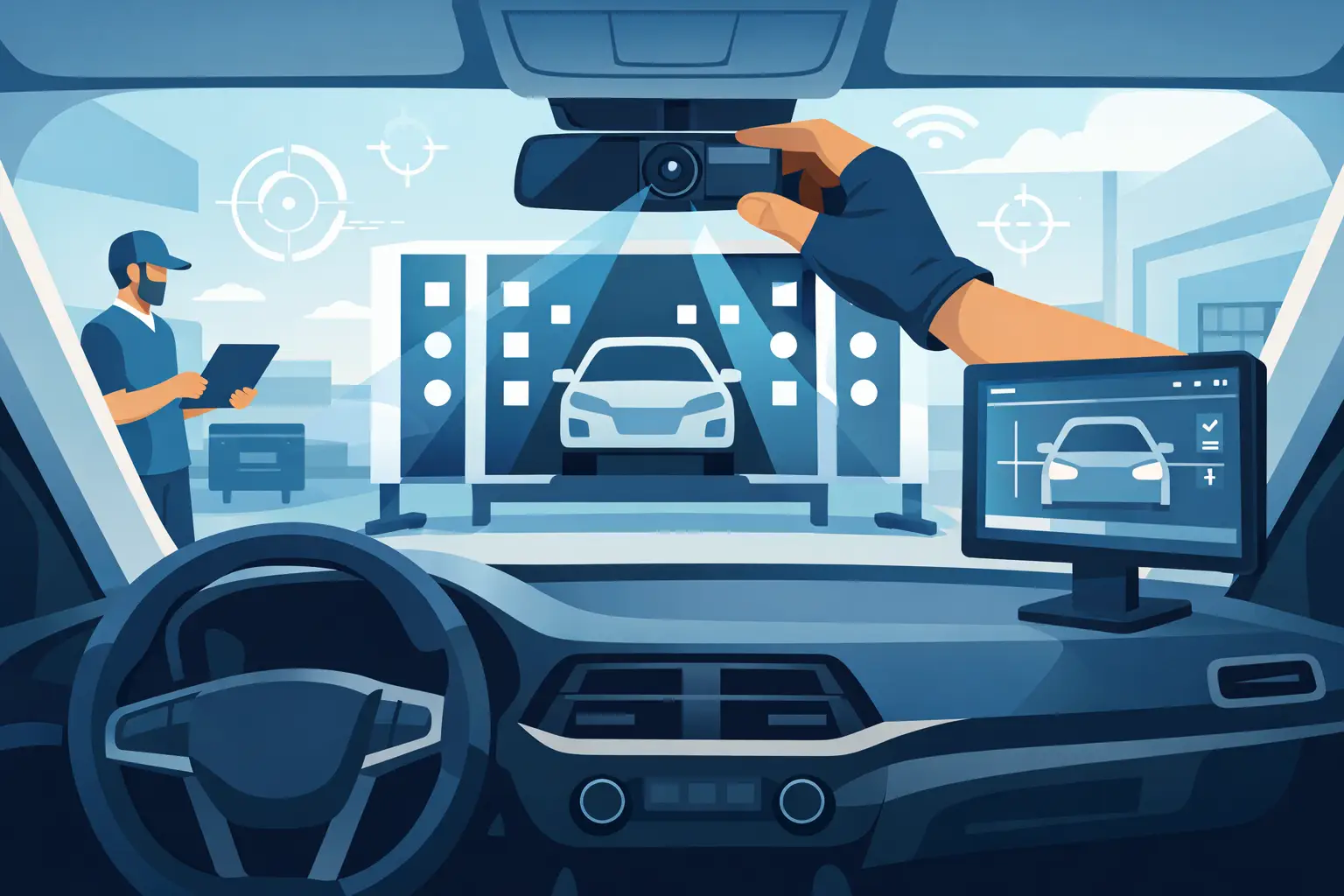
A new windshield can look perfect and still leave a safety system out of alignment. Windshield camera calibration after replacement restores the connection between the camera near your rearview mirror and the road ahead. For many newer vehicles, that camera supports driver-assistance features you may use every day without thinking about them.
If your vehicle has lane departure warnings, automatic emergency braking, forward collision alerts, adaptive cruise control, traffic sign recognition, or lane-keeping assistance, calibration may be required after the windshield is replaced. This is not an optional add-on meant to complicate the job. It is a safety procedure that helps your vehicle’s advanced driver-assistance system, often called ADAS, read the road accurately again.
Why a New Windshield Can Affect Your Camera
The forward-facing camera is commonly mounted behind the windshield, usually near the rearview mirror. Even when the camera itself is not damaged, removing and replacing the glass can change its position by a very small amount. Small changes matter to a camera that measures lane lines, vehicles, distance, and road markings.
The windshield also plays a role in how the camera sees. Glass shape, mounting position, camera brackets, and the area around the camera must match the vehicle’s specifications. A windshield that is installed correctly can still require recalibration because the vehicle needs to establish a new reference point.
Without proper calibration, an ADAS feature may give a warning too early, too late, or not at the right time. In some vehicles, the system may turn itself off and show a warning message. Your brakes, steering, and basic ability to drive will still function, but the driver-assistance features should not be relied on until the vehicle is properly calibrated.
Which Vehicles Need Camera Calibration After Windshield Replacement?
It depends on the vehicle and its equipment. Many late-model cars, trucks, SUVs, and vans use a windshield-mounted camera. Some vehicles require calibration after every windshield replacement. Others require it only when a camera, bracket, or related component has been disturbed.
A technician can identify the need by checking the vehicle’s make, model, year, trim level, and installed safety features. A camera housing near the mirror is a common clue, but it is not the only one. Some systems use cameras, radar sensors, or both. Radar sensors may be located behind the grille or bumper, while the camera is mounted at the windshield.
Do not assume a vehicle is too old or too basic for calibration. Features such as forward collision warning became common across many vehicle brands years ago. If your dashboard displays messages related to lane assist, front camera, collision warning, or safety systems after glass work, schedule an inspection before treating the warning as a minor inconvenience.
What Happens During Windshield Camera Calibration?
Calibration is a controlled process performed with professional scan tools and, depending on the vehicle, measurement equipment or a specified road test. The goal is to confirm that the camera and the vehicle’s computer agree on where the vehicle sits in relation to the road.
There are two main methods: static and dynamic calibration. Some vehicles require one method, while others require both.
Static calibration
Static calibration is performed with the vehicle parked on a level surface. The technician positions targets or patterns at exact distances and heights, then uses diagnostic equipment to guide the camera through the calibration procedure. The surroundings, lighting, tire pressure, ride height, and vehicle positioning can all matter.
Because this process requires space and precise conditions, it may not always be practical in a driveway or parking lot. Free mobile windshield replacement is convenient for many glass jobs, but the calibration requirement for your particular vehicle determines whether the complete procedure can be performed at your location or needs a suitable calibration area.
Dynamic calibration
Dynamic calibration requires driving the vehicle under specific conditions while the system learns its reference points. The required route can vary by manufacturer. It may need clearly marked lanes, steady speeds, daylight, and a certain amount of drive time.
Phoenix-area traffic and bright conditions can be helpful for some dynamic procedures, but road construction, faded lane markings, heavy congestion, or poor weather can delay completion. A qualified technician follows the vehicle manufacturer’s process rather than guessing when the system has reset.
Why Calibration Should Not Be Skipped
A windshield replacement is about more than keeping wind, dust, and Arizona heat out of your cabin. The windshield supports visibility, roof structure, airbag deployment performance, and, on many vehicles, camera-based safety technology.
Skipping calibration can leave you with warning lights, unavailable safety features, or inaccurate alerts. More concerning, you may believe a feature is ready when it is not operating as intended. Driver-assistance systems are not a substitute for paying attention, but they should be set up correctly when they are available.
There can also be practical issues. If a warning light stays on after the glass is replaced, you may have trouble passing a vehicle inspection where applicable, resolving an insurance claim, or selling the vehicle without explaining the alert. Proper documentation of the glass replacement and calibration helps show that the work was completed responsibly.
OEM-Quality Glass and Correct Installation Matter
Calibration cannot correct every problem caused by the wrong windshield or a poor installation. The replacement glass must be made for your vehicle’s camera system, sensors, mounting hardware, and options. A windshield for the same model may not be the right match if trim levels or production years use different camera brackets, heating elements, acoustic layers, or sensor windows.
This is why the lowest quote is not always the lowest overall cost. A price should account for the correct OEM-quality glass, professional installation, moldings or clips when needed, and calibration requirements. Asking whether calibration is included, scheduled separately, or billed through insurance can prevent surprises.
A trained technician will also inspect the camera bracket and surrounding components during replacement. If a bracket is damaged, loose, or improperly bonded to the glass, calibration may fail or the camera may not hold its position over time.
What Drivers Should Do After the Replacement
Before you leave or resume regular driving, look at your dashboard for any ADAS warning messages. Test basic vehicle functions as directed, but do not try to test collision braking or lane-assist features by putting yourself in a risky situation. The technician should explain whether calibration was completed and whether the system needs a normal drive cycle before a warning message clears.
Keep the paperwork from the replacement and calibration. If the vehicle later shows a camera or lane-assist warning, those records help identify whether the issue is related to the windshield, a sensor, a battery event, or another vehicle fault.
If you use insurance, ask about coverage before the appointment. Many comprehensive insurance policies cover windshield replacement and necessary calibration, subject to your policy terms. Pacific Auto Glass accepts all insurance glass claims and can help customers understand the glass-work portion of the process. Cash-paying customers should also request a clear quote that identifies the vehicle’s calibration needs.
Choosing a Shop for ADAS Glass Work
The right provider should ask detailed questions about your vehicle before ordering glass. Be ready to provide the year, make, model, VIN if requested, and the safety features shown on your dash or mirror area. A careful quote takes these details seriously because the correct windshield and calibration process depend on them.
Look for certified, experienced technicians who use proper diagnostic procedures and explain the plan in plain language. Fast service still matters when a windshield is cracked or broken, especially for commuters, families, rideshare drivers, and work vehicles across Mesa, Tempe, Chandler, Gilbert, Queen Creek, Scottsdale, and the greater Phoenix area. But speed should not mean skipping a required safety step.
When you schedule service, mention any dashboard warnings and ask whether your vehicle requires static calibration, dynamic calibration, or both. That one conversation helps the technician arrive prepared and helps you plan for the appointment.
A replacement windshield should leave you with a clear view and confidence in the systems built around it. If your vehicle uses a forward-facing camera, make calibration part of the repair plan from the start, then get back on the road knowing the job was handled with your safety in mind.
