
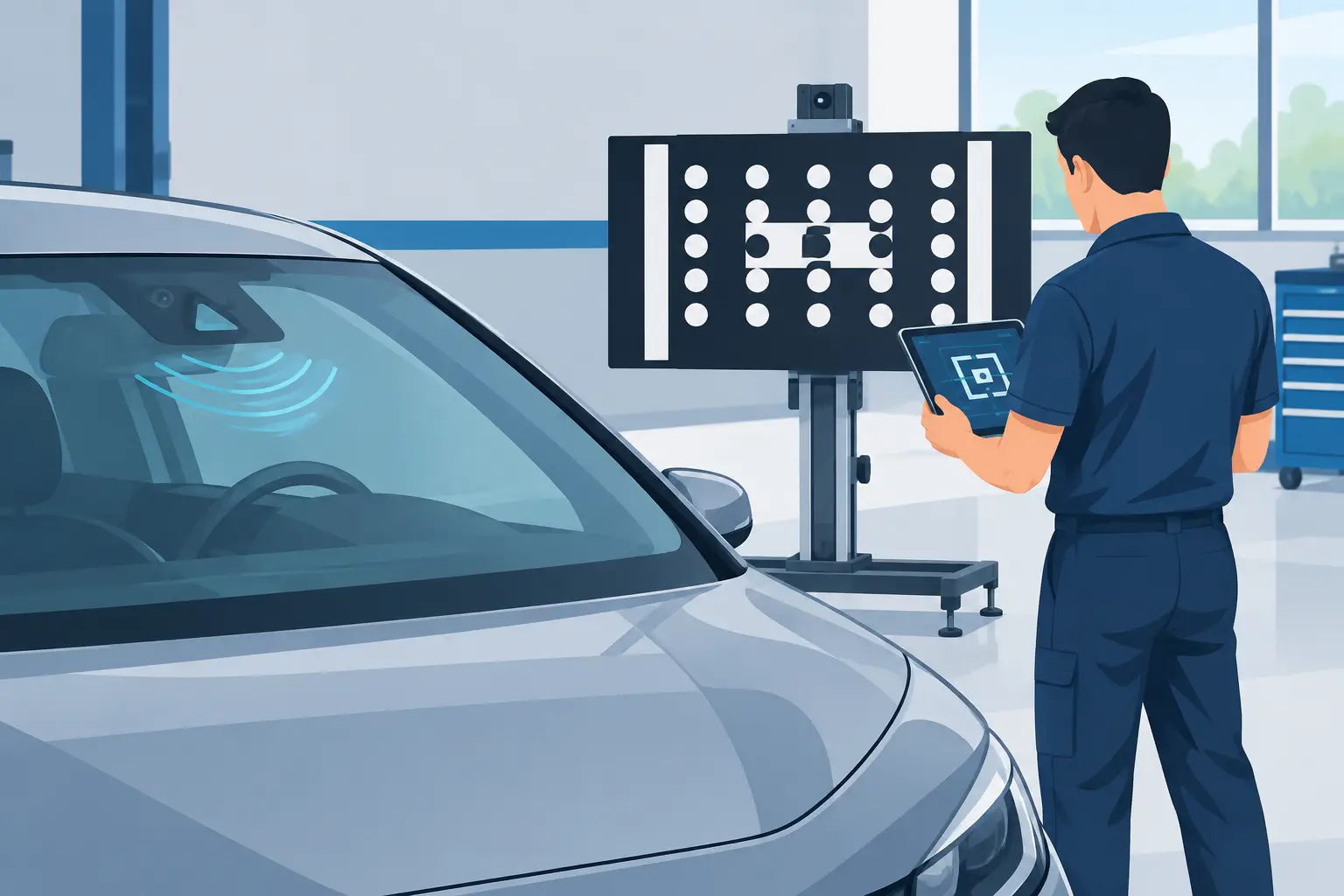
A new windshield can look perfect and still need one more safety step before your vehicle is ready to drive. If your car has a forward-facing camera near the rearview mirror, windshield calibration may be required after replacement. That camera helps power features such as lane departure warnings, automatic emergency braking, adaptive cruise control, and traffic-sign recognition.
For Phoenix-area drivers, this is not a detail to put off. Heavy freeway traffic, bright sun, construction zones, and long commutes all make properly functioning driver-assistance systems more valuable. Calibration confirms the camera is reading the road from the correct position through the new glass.
What Is Windshield Calibration?
Windshield calibration is the process of resetting and aiming a vehicle’s advanced driver-assistance system, often called ADAS, after windshield replacement. The camera mounted behind the windshield must be aligned with the vehicle’s exact centerline, height, and angle. Even a small change in camera position can affect what the system sees.
The windshield itself is part of that setup. On many newer vehicles, the glass has a designated camera mounting area, brackets, heating elements, special shading, or other features designed for the vehicle’s safety equipment. That is one reason OEM-quality glass and correct installation matter. The right glass helps ensure the camera has a clear, properly designed view.
Calibration is not the same as checking whether the camera turns on. A dashboard warning light may stay off even when a camera is not aimed precisely enough for the manufacturer’s standards. The calibration process uses diagnostic equipment and, depending on the vehicle, targets, measurements, and a controlled road drive to verify its position.
When Is Windshield Calibration Needed?
A windshield replacement does not automatically mean every vehicle needs calibration. Older vehicles and models without a camera or ADAS features generally do not require it. But if your vehicle has a camera mounted near the rearview mirror or uses safety features that monitor lane markings and vehicles ahead, calibration is often required or strongly recommended by the manufacturer.
Replacement is the most common reason, but there are other situations where a technician may recommend calibration. These include a collision, suspension or alignment work, camera replacement, changes to the camera bracket, or a dashboard warning related to forward-facing safety systems. A cracked windshield can also interfere with the camera’s view when damage spreads into its viewing area.
If you are unsure whether your vehicle has ADAS, look for controls or dashboard messages related to lane keeping, collision alerts, automatic braking, following distance, or adaptive cruise control. Your vehicle’s year, make, model, and equipment package determine the exact requirements. A qualified glass technician can verify what applies before the work begins.
Why Calibration Should Not Be Skipped
Driver-assistance features are not a replacement for paying attention behind the wheel. Still, they can provide an extra warning or braking support when traffic changes quickly. If the camera is aimed too high, too low, or slightly off center, the system may misread lane lines, judge distance incorrectly, or respond later than expected.
That does not always mean the system will fail completely. The concern is that it may not perform as designed when you need it. For a commuter driving US-60, Loop 202, I-10, or surface streets through Mesa, Tempe, Chandler, and Phoenix, small errors can matter when traffic slows without much warning.
Skipping calibration can also leave an ADAS warning light on, disable certain features, or create trouble during a post-repair inspection. More importantly, it means a safety system may be operating outside the vehicle manufacturer’s specifications. The cost and time involved are usually far less than the inconvenience of finding out a feature is not working properly after you are back on the road.
Static vs. Dynamic Calibration
There are two common calibration methods. Some vehicles require static calibration, which is completed while the vehicle is parked in a carefully measured space. The technician uses a scan tool and manufacturer-specific targets positioned at exact distances from the vehicle. The floor needs to be level, lighting and surroundings may matter, and there must be enough clear space to set up the equipment correctly.
Other vehicles use dynamic calibration. This method uses a scan tool while the vehicle is driven under specific conditions. The car may need clear lane markings, steady speeds, and a certain amount of road time before the system completes its relearn process.
Some vehicles require both methods. This is why no honest glass company should promise the same calibration process for every car. The correct procedure depends on the manufacturer, model year, installed safety options, and diagnostic results. A certified technician should follow the applicable procedure instead of guessing or using a one-size-fits-all approach.
Can Calibration Be Done With Mobile Windshield Replacement?
Often, yes, but it depends on the vehicle and the location. Mobile windshield replacement is a practical option for many homes, workplaces, and fleet locations across the East Valley. A technician can replace your damaged windshield where your vehicle is parked, helping you avoid taking time off work or arranging a ride.
However, some static calibration procedures need conditions that are difficult to create in a driveway, crowded parking lot, or uneven space. Weather, glare, limited room, poor pavement, and nearby obstacles can affect whether mobile calibration is appropriate. Dynamic calibration also depends on safe local road conditions and whether the vehicle completes the required procedure.
The right approach is simple: confirm the calibration requirement before scheduling. If the vehicle can be properly calibrated on site, mobile service may handle the full job. If a controlled setting is necessary, the technician should explain that upfront and arrange the next step. Convenience matters, but accurate results matter more.
What to Expect During the Appointment
The process starts with identifying your vehicle and its options. Technicians should inspect the windshield area, camera mount, and ADAS equipment before replacement. After the new windshield is installed and the adhesive has had the required time to cure, the calibration procedure can begin.
The technician connects diagnostic equipment to the vehicle, checks for fault codes, and performs the required static or dynamic process. When complete, the system is checked again for successful results. If a warning remains or the procedure does not complete, that does not automatically mean the new windshield is at fault. A pre-existing sensor issue, camera damage, wiring concern, or manufacturer software requirement may need additional diagnosis.
Plan for calibration to add time beyond the windshield installation itself. The exact timing varies by vehicle, adhesive cure requirements, and calibration method. If you need your vehicle for school pickup, a delivery route, or a work commute, mention that when requesting a quote so the appointment can be planned realistically.
Insurance, Glass Choice, and Straight Answers
Many comprehensive auto insurance policies cover windshield replacement, and calibration may be included when it is required as part of the repair. Coverage, deductibles, and approval requirements vary by policy, so it is smart to verify the details before service. Pacific Auto Glass accepts all insurance glass claims and can help customers understand the process without making it harder than it needs to be.
For cash-paying customers, ask for a clear quote that separates the windshield replacement and any required calibration. The lowest glass price is not always the lowest complete repair cost if it leaves out camera work or uses glass that does not match the vehicle’s equipment. On the other hand, not every windshield job needs the most expensive option. The right choice depends on your specific vehicle and its features.
If you have a damaged windshield, do not wait until the crack reaches the camera area or your view of the road. Get the glass inspected, ask whether calibration is required, and make sure the final repair restores more than just a clear view. A properly installed windshield and correctly calibrated safety system give you a better reason to feel confident on the next drive home.
