
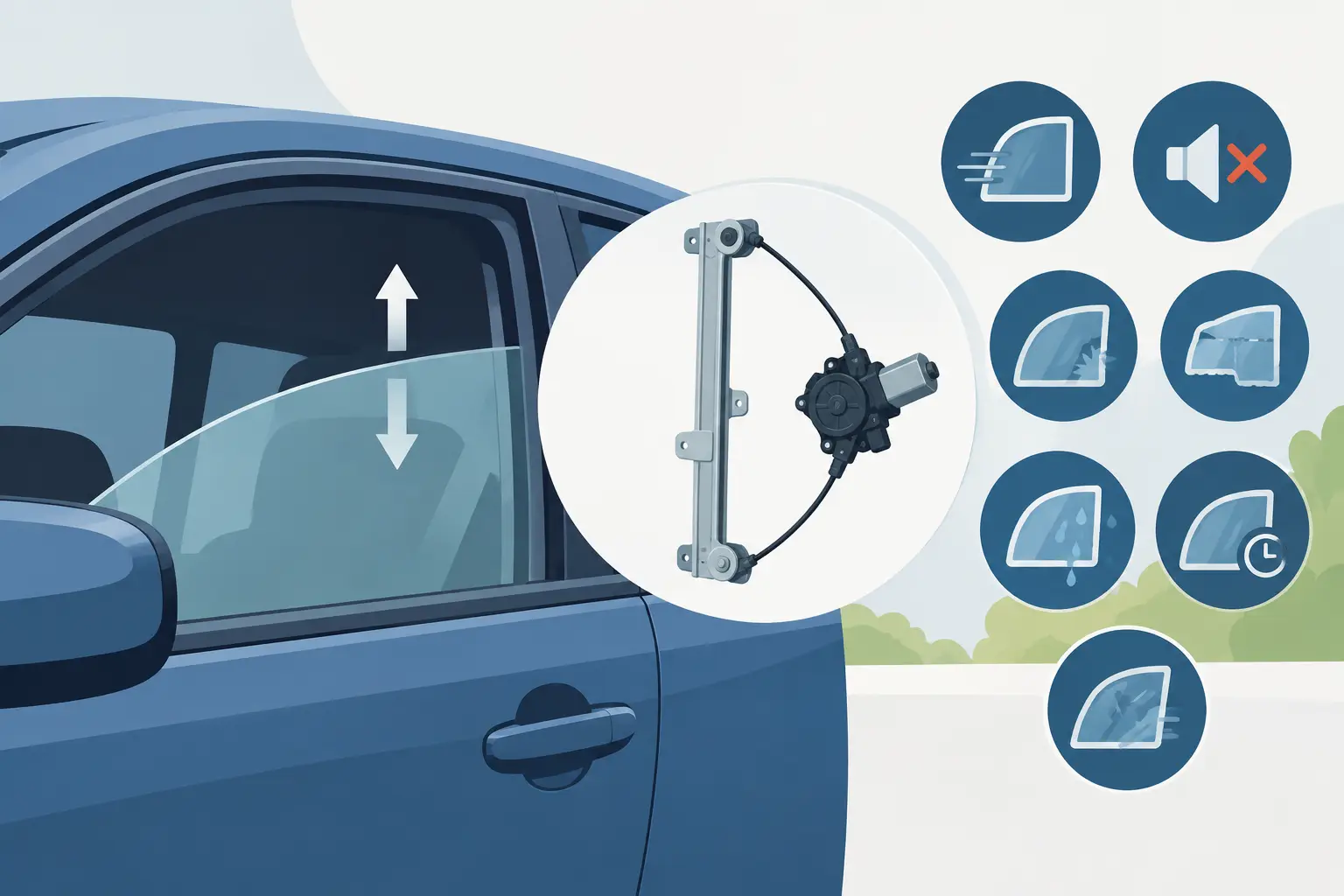
A power window that stops halfway while you are heading across Mesa in summer is more than an inconvenience. It can leave your vehicle exposed to heat, rain, theft, and road dust. Recognizing window regulator symptoms early can help you arrange a repair before the glass drops into the door or becomes stuck wide open.
The window regulator is the mechanism inside your door that raises and lowers the glass. On most newer vehicles, an electric motor powers the regulator through cables, pulleys, or a scissor-style assembly. When one of those parts begins to fail, the window usually gives you a warning before it quits completely.
7 Window Regulator Symptoms to Watch For
1. The window moves slowly or struggles to go up
A healthy power window should move steadily with a single press of the switch. If it crawls upward, pauses, or needs several attempts before it closes, the regulator may be binding or the motor may be losing strength.
There is some overlap here. Dry window channels, dirty weatherstripping, or extreme heat can add resistance and make a window seem sluggish. But if the problem keeps happening, especially on one door only, the regulator or motor needs a closer look. Do not keep cycling the switch to force it closed. That extra strain can turn a repairable issue into a window that will not move at all.
2. The glass rises crooked or slips out of alignment
A window that tilts forward or backward as it moves is a common sign of a failing regulator. You may see a gap at the top edge of the glass, hear it rub against the door frame, or need to guide the glass by hand.
This often happens when a regulator cable frays, a guide clip breaks, or the assembly no longer holds the glass evenly. The window may still work for a short time, but it is at risk of binding or dropping. Avoid slamming the door or forcing the switch when the glass is crooked, because tempered side glass can break under uneven pressure.
3. You hear grinding, clicking, popping, or scraping
Unusual noise inside the door is one of the clearest window regulator symptoms. A clicking noise can mean a worn gear or failing motor. Grinding may point to damaged cables, a stripped gear, or broken pieces moving inside the door. Popping or snapping sounds are often associated with a cable coming loose from its track.
A little noise does not always mean the glass will fail that day, but it is not something to ignore. The regulator works under load every time the window moves. Once a cable begins to fray or a plastic guide cracks, the remaining parts can fail quickly.
4. The motor runs, but the window does not move
You press the switch and hear a hum, whir, or faint mechanical sound, yet the glass stays in place. In many cases, the motor still has power but the regulator has disconnected from the glass or broken internally.
This is different from a completely silent window. When you can hear the motor but get no movement, the electrical side may be fine. The problem is often the regulator assembly itself. A technician can remove the door panel, inspect the cable and guides, and confirm whether the regulator needs replacement.
5. The window falls down into the door
If the glass suddenly drops or slides down when you open the door, treat it as a priority repair. The regulator may have lost its grip on the glass, a clip may have broken, or a cable may have snapped.
Do not drive with a loose window if you can avoid it. The glass can shift, crack, or create a security risk. Covering the opening may keep out some dust or weather temporarily, but it does not secure the glass inside the door. A professional repair restores the regulator and makes sure the glass is correctly seated and aligned.
6. The window works only sometimes
Intermittent operation is frustrating because the window may work perfectly one day and fail the next. It can be caused by a weak motor, damaged wiring, a worn switch, or a regulator that catches at a certain point in its travel.
Pay attention to the pattern. If the window works from the driver controls but not from its own door switch, the switch could be the issue. If it fails from both switches, moves unevenly, or makes mechanical noises, the motor or regulator is more likely involved. Proper diagnosis matters because replacing the wrong part costs time and money without fixing the problem.
7. The window will not stay fully closed
A window that stops short of the top, reverses unexpectedly, or falls a few inches after closing needs attention. Some vehicles have pinch-protection systems that reverse the glass if they sense resistance. A misaligned window, worn regulator, or excessive friction in the tracks can trigger that feature.
In older vehicles, the issue may simply be a weak regulator that cannot hold the glass in position. Either way, an opening at the top of the window allows hot air, moisture, and unwanted access into your vehicle. For Phoenix-area drivers, a window that will not close can make a parked car uncomfortable very quickly.
What Causes a Window Regulator to Fail?
Window regulators operate in a tight space and deal with more wear than most drivers realize. Door slams, frequent use, worn cables, aging plastic clips, and damaged tracks all take a toll. Arizona heat can also dry out window channels and put added resistance on the mechanism.
Water intrusion is another possible cause. Moisture inside a door can corrode electrical connections, weaken a motor, or affect moving hardware over time. If your side window was broken during a break-in or accident, the impact may have damaged the regulator, tracks, or mounting points even if the replacement glass looks fine.
The exact cause depends on the vehicle. Some models are more prone to cable-style regulator failures, while others commonly develop weak motors or worn switches. That is why a complete inspection is better than assuming every stuck power window needs the same part.
Is It the Window Regulator, Motor, Switch, or Glass Track?
These parts work together, and their symptoms can look similar. A failed switch often affects one set of controls and may produce no motor sound. A bad motor may cause a slow window or a silent window, depending on the failure. A bad regulator often causes crooked movement, mechanical noise, a dropped window, or a motor that runs without moving the glass.
The glass track and weatherstripping can also create resistance. If the window is straight but moves slowly, cleaning and inspecting the channels may be part of the repair. If the glass is visibly tilted, loose, or scraping, the regulator or its guides are more likely to blame.
A qualified technician can test the switch and wiring, listen to the motor, remove the door panel when needed, and check the regulator under load. That approach prevents guesswork and helps you pay for the repair your vehicle actually needs.
What to Do When Your Power Window Fails
If the window is stuck open, avoid leaving the vehicle unattended. Do not pull hard on the glass, wedge it into place, or repeatedly press the switch. Those quick fixes can damage the glass, door panel, motor, or regulator further.
If the window is partially open and rain is possible, protect the interior as best you can until service is available. If the glass is broken, loose, or has fallen inside the door, do not operate the window switch. Broken tempered glass can have sharp edges, and the mechanism may be under tension.
For a stuck window, broken door glass, or suspected regulator issue, mobile service can save a trip to a shop. Pacific Auto Glass provides power window motor and regulator repair along with side-window and door-glass service for drivers throughout the Phoenix metro area. Certified technicians can diagnose the problem and help restore a secure, working window at your location.
A window that hesitates today may leave your car open tomorrow. Scheduling service when the first warning signs appear is usually the simplest way to protect your vehicle, your schedule, and your peace of mind.
