
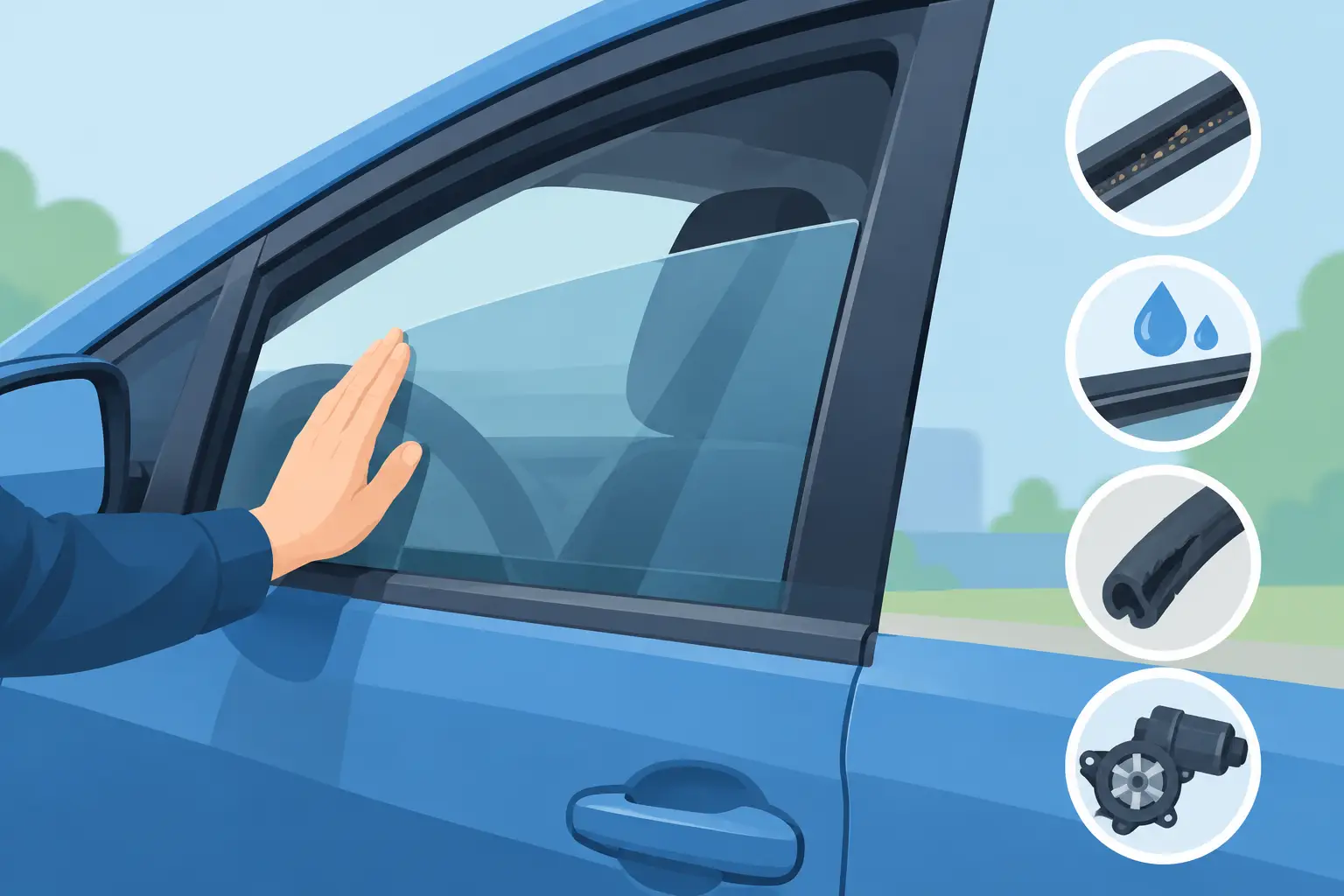
A window that hesitates at the drive-thru, stops halfway on a hot Phoenix afternoon, or will not close before rain is more than an inconvenience. If you are asking, “why does car window stick,” the answer may be as simple as dirty window tracks or as involved as a failing power window regulator. The key is not forcing it. Catching the problem early can often prevent broken glass, a burned-out motor, or a window stuck open when you need your vehicle secure.
Why Does a Car Window Stick?
Your car window is guided by rubber seals and metal tracks, then moved by either a hand crank or an electric motor and regulator assembly. When one of those parts becomes dirty, dry, loose, bent, or worn out, the glass can drag, tilt, move slowly, or stop altogether.
In the Phoenix metro area, dust, extreme heat, and dry rubber seals are common contributors. A vehicle does not need to be old for a power window to have trouble. Frequent use, heat exposure, and normal wear can affect newer vehicles too.
The way the window behaves offers useful clues. A window that moves but squeaks may have dirty or dry tracks. One that makes a clicking or grinding sound may have a worn regulator. If nothing happens when you press the switch, the issue could be electrical, the motor, or the switch itself.
The Most Common Reasons a Car Window Gets Stuck
Dirty or dry window tracks
The glass rides inside channels lined with rubber weatherstripping. Dirt, sand, leaves, and old residue can build up in those channels. In Arizona, fine dust can work its way into places you rarely see, creating extra friction every time the window moves.
The window may rise slowly, shake as it moves, or leave streaks on the glass. Dry weatherstripping can also grip the glass, particularly after the vehicle has sat in direct sun. This is often one of the simpler causes, but it should still be addressed before the added resistance wears down the motor.
Worn weatherstripping or a damaged window channel
Rubber seals do not last forever. Heat can harden, shrink, crack, or distort weatherstripping over time. A loose or damaged channel may no longer guide the window evenly, so the glass binds on one side.
You may notice wind noise, water entering around the door glass, or a window that looks slightly crooked when it goes up. Replacing worn seals or repairing the channel can restore smooth movement and help protect the interior from dust and water.
A failing power window regulator
The regulator is the mechanism inside the door that raises and lowers the glass. Depending on the vehicle, it uses cables, pulleys, arms, and plastic guides. These parts can fray, break, slip, or wear out.
A failing regulator often causes the window to move unevenly, drop suddenly, stop partway, or make a crunching, popping, or grinding sound. In some cases, the motor still runs but the glass does not move because the regulator is no longer holding or lifting it correctly.
This is not a repair to put off if the window will not stay up. Loose glass inside the door can break, and an open window leaves your vehicle exposed to theft, weather, and road debris.
Weak or failing window motor
The power window motor supplies the force that moves the regulator. A motor can become weak gradually, which is why some drivers notice the window working slower for weeks before it fails completely. It may work when the vehicle is cool but struggle after the door has been sitting in the sun.
If the window moves only when you hold the switch a certain way, goes up more slowly than it goes down, or works intermittently, the motor may be nearing the end of its service life. A technician can test the system to determine whether the motor, regulator, or both need replacement.
A bad window switch, fuse, or wiring problem
Not every stuck power window is a mechanical problem. If one window does not respond at all, a faulty switch or damaged wiring inside the door may be responsible. If several windows quit working together, check for a blown fuse or a broader electrical issue.
The driver’s master switch is another common trouble spot because it gets used more than any other window control. Do not assume the motor is bad until the electrical controls have been checked. Replacing the wrong part adds cost without fixing the problem.
Misaligned or damaged door glass
A hard door slam, attempted break-in, collision damage, or previous glass repair can leave a window slightly out of alignment. The glass may rub against the frame, bind at the top, or catch in the weatherstrip.
If the glass is chipped, cracked, scratched deeply, or appears tilted, stop operating it repeatedly. Door glass can shatter under pressure, especially if the regulator continues pulling against a jammed pane.
What You Can Safely Try Before Scheduling Repair
Start by looking for obvious debris along the top of the window channel. With the vehicle off, gently wipe accessible dirt from the rubber seals using a clean, soft cloth. Avoid sharp tools that can tear the weatherstripping or scratch the glass.
If the window is power-operated, listen closely when you press the switch. A motor sound without glass movement usually points toward the regulator or a disconnected component. No sound at all can suggest a switch, fuse, wiring, or motor issue. Those details help a technician diagnose the problem faster.
You can also test the window from its own door switch and, if applicable, the driver’s master switch. If one works and the other does not, the switch is a likely suspect. Do not keep pressing the button for long periods, pull forcefully on the glass, or slam the door to make the window move. Those actions can turn a minor track issue into a broken regulator or shattered side window.
Avoid spraying household oils or heavy grease into the tracks. They collect dust and can make the problem worse. The correct lubricant and repair method depend on the window channel and the cause of the binding.
When a Sticking Window Needs Professional Help
Schedule power window repair promptly if the glass is crooked, drops into the door, will not close, makes grinding noises, or moves only intermittently. These signs usually mean there is more going on than surface dirt. A certified technician can remove the door panel, inspect the regulator, motor, cables, guides, switches, and glass alignment, then repair the actual cause.
Mobile service can be especially helpful when a window is stuck open or the glass is unstable. There is no need to drive across town with an unsecured vehicle if a qualified technician can come to your home, office, or job site. For Phoenix-area drivers, Pacific Auto Glass provides mobile power window regulator repair and car door glass service with straightforward quotes and experienced technicians.
Protecting Your Power Windows in Arizona
You cannot prevent every mechanical failure, but a little attention can reduce unnecessary strain. Keep door channels reasonably clean, address slow movement early, and avoid operating a frozen or visibly jammed window. Parking in shade or using a windshield sunshade can also reduce the heat exposure that dries out rubber seals and stresses electrical components over time.
If your window starts slowing down, squeaking, or tilting, treat it as an early warning instead of waiting for it to stop on the day you need it most. A quick inspection now is usually easier, safer, and less disruptive than dealing with a window that is stuck open overnight.
