
A window that drops into the door, stops halfway, or refuses to close is more than an inconvenience in Mesa. It can leave your car exposed to heat, dust, rain, theft, and a long drive with road noise. When you need power window regulator repair Mesa vehicle owners can depend on, the goal is simple: find the cause, restore the window safely, and get you back to your normal routine without unnecessary delay.
A failed power window does not always mean the glass itself is damaged. In many cases, the problem is the regulator – the cable, track, and lifting mechanism inside the door that moves the glass up and down. Pacific Auto Glass provides straightforward power window motor and regulator service for drivers across Mesa and the Phoenix metro area, with certified technicians, clear quotes, and convenient mobile options.
What a Window Regulator Does
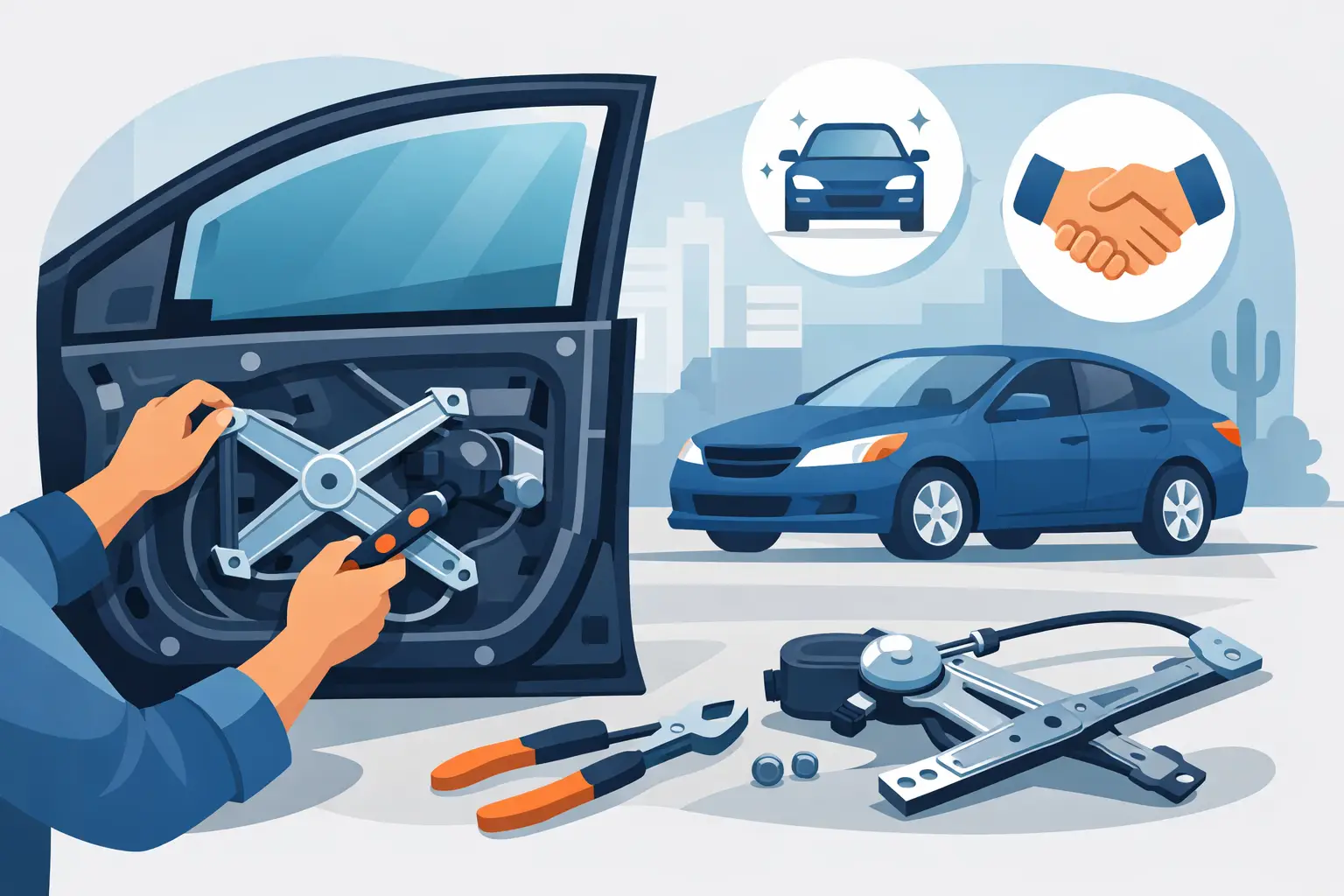
Your vehicle’s power window system has several parts working together. The switch sends power to the window motor. The motor turns the regulator, and the regulator guides the glass through the door frame. Most modern vehicles use a cable-style regulator, although some older vehicles use a scissor-style design.
The regulator carries much of the mechanical load. Its cables can fray, a plastic guide can crack, a track can bend, or the assembly can bind. When that happens, the motor may still make noise, but the glass may not move correctly. A broken regulator can also allow the glass to tilt, fall, or become stuck inside the door.
Mesa heat can make a weak component show itself quickly. Window seals can become dry and sticky, and frequent use puts extra strain on aging cables, clips, and motors. The issue may start as a slow window and become a window that will not close at all.
Signs You Need Power Window Regulator Repair in Mesa
A few symptoms can help point toward a regulator problem. If the window moves slowly, jerks as it rises, or stops at different points, the mechanism may be binding. A grinding, clicking, or cable-like scraping sound inside the door is another common warning sign.
If you hear the motor running but the glass does not move, slips down after going up, or sits crooked in the frame, the regulator is a likely cause. Glass that has fallen into the door should be addressed promptly. Trying to pull it up by hand or repeatedly pressing the switch can damage the glass, motor, or door panel.
Sometimes the problem is electrical instead. A dead switch, blown fuse, broken wiring, or failed motor can create similar symptoms. That is why a proper inspection matters. Replacing a regulator when the motor or switch is the real problem adds cost without fixing the issue.
Why a Stuck Window Should Not Wait
An open or loose window creates an immediate security concern. It also lets Arizona dust and heat into the cabin, which can make commuting or transporting children uncomfortable fast. During monsoon season, even a short storm can send water into the door panel, upholstery, and electrical components.
There is also a safety side to the repair. If the glass is loose in the door, it can shift unexpectedly while driving. A regulator that is binding may put pressure on the glass edge and increase the chance of breakage. If your window is partway down and will not move, avoid slamming the door or forcing the switch. Keep the vehicle secured and arrange service as soon as you can.
What Happens During the Repair
A qualified technician begins by checking how the window responds at the switch and listening for motor operation. The door panel is carefully removed so the motor, regulator, guides, wiring, and glass mounting points can be inspected. This step identifies whether the problem is mechanical, electrical, or a combination of both.
If the regulator has failed, the damaged assembly is removed and the replacement is installed. The glass is aligned in its tracks, the movement is tested several times, and the technician checks that the window seals properly at the top. The door panel is then reassembled with care.
The right repair depends on the vehicle and failure. In some cases, a regulator can be replaced while the existing motor is reused. In others, the motor and regulator are supplied as one assembly, making replacement of both parts the practical choice. A trustworthy technician should explain what failed and why before work begins.
Repair or Replacement: What Makes Sense?
A small alignment issue or loose mounting point may not require a complete regulator replacement. But damaged cables, broken guides, worn pulleys, and bent tracks usually mean the assembly should be replaced. These internal parts are under tension, and a temporary fix may fail again when you need the window most.
Cost varies by vehicle make, model, door location, and part design. Luxury vehicles, trucks with more complex door assemblies, and vehicles with integrated sensors or sound insulation can take more labor. A front window regulator may also differ from a rear regulator. The best way to avoid surprises is to request a clear quote based on your specific vehicle and symptoms.
For older vehicles, owners sometimes ask whether an aftermarket part is worth it. It depends on the available quality, the vehicle’s condition, and the part warranty. A low-priced regulator can be tempting, but poor cable routing or weak plastic components can lead to another repair. Quality parts and correct installation are usually the better value over time.
Mobile Service Makes the Problem Easier to Handle
Driving across town with a window down is not always practical, especially when the glass is stuck inside the door. Free mobile service can save time for commuters, families, rideshare drivers, and small business vehicles that need to stay on the road.
For Mesa customers, mobile power window service may be available at home, work, or another safe location. Access depends on the vehicle, needed parts, and the condition of the door and glass, so it is smart to describe the problem when requesting a quote. Let the service team know whether the glass is up, down, tilted, shattered, or making noise. Those details help prepare for the repair.
Pacific Auto Glass serves Mesa along with Tempe, Chandler, Gilbert, Queen Creek, San Tan Valley, Maricopa, Scottsdale, Phoenix, and nearby communities. Bilingual assistance is available for English- and Spanish-speaking customers who need help explaining the issue or scheduling service.
Can You Fix a Window Regulator Yourself?
Some experienced vehicle owners can replace a regulator, but it is not always a simple weekend job. Door panels often use hidden clips and screws that can break if removed incorrectly. The glass must be supported safely, and cable-style regulators can be difficult to handle once damaged. Incorrect alignment can leave the window crooked, noisy, or unable to seal.
DIY repair may make sense if you have the correct part, tools, repair information, and time to diagnose the system. It is less appealing when the window is down, the weather is rough, the glass is loose, or you are unsure whether the motor is also failing. Professional service can prevent damage to the door trim, wiring, and window glass while getting the vehicle usable again sooner.
How to Protect Your Power Windows
No power window system lasts forever, but a little care can reduce unnecessary strain. Keep the window tracks and seals reasonably clean, especially after dusty conditions. If a window begins moving slowly or making noise, do not ignore it for months. Early service may prevent the glass from binding or falling into the door.
Avoid holding the switch after the window has fully opened or closed. Also, do not force frozen, heavily obstructed, or visibly crooked glass. If children use the rear windows often, make sure the window lock function works properly and that the windows close smoothly.
A stuck power window tends to become urgent at the worst possible moment – during a workday, before a trip, or when the weather turns. Getting a fast inspection and an honest repair recommendation can protect your vehicle and make the rest of your day much easier. If your window is slow, crooked, noisy, or stuck, request a free quote and have the problem checked before it leaves your vehicle exposed.
